Find out about the company which built the Totnes Passivhaus: visit www.passivhaushomes.co.uk.
Read The Passivhaus Handbook, co-authored by the writer of this blog".


Follow the progress of the project with video clips on YouTube

Friday, 22 February 2013

Totnes Passivhaus at Ecobuild

Authors of the Passivhaus Handbook, Janet Cotterell and Adam Dadeby, will be speaking at Ecobuild on 5th March 2013.

Slot 1 – first 20 min presentation within 12.30 – 14:00 session – retrofit and new-build case studies – seminar room 1 – “Passivhaus – using Passivhaus to help obtain planning consent … ” see http://www.ecobuild.co.uk/seminars/session/passivhaus/91/tuesday-05-march/seminar-room-1.html

Slot 2 – last 20 min presentation within 15.45 – 17:00 session – “Totnes Passivhaus: exemplar retrofit to Certified Passivhaus standard” – seminar room 8 – “Self build and renovation” – see http://www.ecobuild.co.uk/seminars/session/sustainable-self-build-and-renovation/79/tuesday-05-march/seminar-room-8.html

The Passivhaus Handbook will also be for sale at the RIBA Bookshop stand - S1230 and S1330 in the South Hall of Excel.

Wednesday, 24 October 2012

The Passivhaus Handbook

The Passivhaus Handbook, A practical guide to constructing and retrofitting buildings for ultra-high energy performance is published tomorrow (25 October 2012). The book expands on the topics discussed in this blog.


The Passivhaus Handbook has been getting good reviews:

‘Passivhaus construction looks like becoming not just popular in the UK, but commonplace. This is a no-nonsense and engaging introduction on how to do it.’
Kevin McCloud, presenter of Channel 4′s Grand Designs

‘This book gives a wonderful overview of Passivhaus in the UK today, not only enabling interested parties to understand the principles and pitfalls for their own projects, but also for policy makers and planning officers to understand how to avoid some of their ‘own goals’ in attempting to encourage conservation.’
Peter Warm, Passivhaus Certifier, WARM Low Energy Building Practice

‘I have now recommended your book to our four individual current Passivhaus clients wanting to build a Passivhaus. Your book will save me hours and hours of having to explain the principles of what we are trying do, to first time clients on a steep PH learning curve.’
Andrew Yeats CEPH Architect, Eco Arc Architects

‘I’m delighted to see everything about Passivhaus and its application in the UK collated for the first tiime, in The Passivhaus Handbook. The first-hand experience of the authors provides an excellent grounding for the book.’
Jon Bootland, Chief Executive, Passivhaus Trust

Here is the description of the book from the Green Books website:

The Passivhaus Handbook is an essential guide for everyone wanting to realise a supremely comfortable, healthy and durable home with exceptionally low energy costs. Whether you are building an extension, retrofitting your house or starting from scratch; are new to low-energy design or already have some experience, this book will help you navigate around the potential pitfalls and misconceptions. It brings together current thinking and best practice.

Passivhaus design focuses first on getting the building fabric right, to achieve ultra-low energy consumption in the most cost-effective manner. The approach is relevant to a wide range of building types and climates, not just to special structures. Passivhaus methodology can be combined with elements of other building standards, such as the UK’s Code for Sustainable Homes, or with other goals, such as a commitment to use low-impact and natural building materials.

This book includes:

  • A clear explanation of the underlying building physics.
  • Detailed information on key elements: avoiding air leakiness, designing out thermal (cold) bridges, moisture management and ventilation strategy.
  • Tips for creating a cooperative, motivated project team.
  • Photographs and diagrams throughout.

With steeply rising energy prices, uncertain climatic changes and straitened economic times, the Passivhaus approach, proven over 20 years, offers a timely and practical response.

The Passivhaus Handbook is available from Passivhaus Store as well as from online retailers. I hope you find it useful.

Sunday, 23 October 2011

We get our Passivhaus Certification

This week we had a little ceremony to mark getting our formal Passivhaus Certification. Rob Hopkins, of the Transition Network, kindly came to handover our newly gained certificate.


We have now been in the house just over two months and we are "looking forward" to a decent winter, to give the house a bit of a test. We are probably going to want to make some adjustments to our ventilation, once we have started using it to transport the small amounts of heat around the house. More on this in a future post.


From left to right: Janet Cotterell - Passivhaus architect, me - Passivhaus energy modelling (and client), Jonathan Williams - Passivhaus builder, Joe Bellows - one of the Passivhaus contractor team, Peter Warm - Passivhaus Certifier.

Wednesday, 28 September 2011

Living in a Passivhaus, the first few weeks

We have been living in the completed Passivhaus Home since 19 August and are really looking to seeing how the house will perform this winter. So far, the temperature internally has been pretty constant. The only time we had some overheating was over the weekend of 10th and 11th September, when we took part in the Open House event. We had over 150 people visiting and there were a lot of people in the house adding to the heat gain noticeably. It was warm, humid and windy outside (unusual weather) and we found that the tilt and turn windows, some of which we had tilted open to provide extra ventilation and cooling kept blowing closed in the wind.

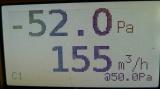
We are still tweaking the settings on the MVHR unit (heat recovery ventilation unit). The MVHR is designed to recover the heat from the old, outgoing air and give it to the new, incoming air. Of course, during warmer summer weather, this is the last thing you want. So MVHR units are designed not to recover any heat when this is not needed.

The heat recovery was kicking in when it was not needed. We have tweaked the settings so that it only comes in at 18C (the minimum temperatures allowed) and turns off if the temperature reaches 20C. The picture above, which was taken a few minutes ago, shows that the summer bypass is enabled, which means that it isn't recovering heat - a bit counter intuitive.I must say that the user interface needs a little improvement. There's definitely a little product development work for Paul here. I feel that this is an often ignored part of a product's design. An impatient user might have decided just to switch the unit into standby until the weather got cold enough for the heat recovery to be needed, which would have defeated the purpose of the system. That said, once set up correctly, we shouldn't have to fiddle with this again.

Our hot water system has an even less user-friendly interface. Although this is not a Passivhaus specific issue. I think Passivhaus buildings need as much thought to go into how easy they are to use as goes into the design and construction of the fabric. Although not a problem for us and probably for other early adopters in the UK, it will have an impact on the way Passivhaus is perceived.

Friday, 22 July 2011

Certification airtightness test

Note: since posting this, the completed air test documents show a result of 0.2 air changes per hour.

It's been a while since I've posted during the always-longer-than-the-client-expects period where all the finishing work is completed.

We have started the process to get Certification as a Passivhaus, using the UK's top certifier and general guru on all things building physics related, Warm Low Energy Practice. Yesterday, Paul Jennings ("doorfanman"), our airtightness consultant completed the official airtightness test and we got:

0.19 air changes per hour!

This is a really big improvement on April's test. Partly because I calculated the internal volume more accurately, using Bluebeam, which has a great tool for measuring dimensions, areas etc of PDF plans. Our internal ventilation volume is 442.38m³ and the April test had been based on a rougher calculation of 400m³. Mostly though, the information from the April test helped us to to improve the weak areas.

It will be interesting to see how durable our result is. We believe we have created an airtightness layer which lasts.

I had already put up a DIY shelf in one of the rooms before yesterday's test was conducted, which required drilling a few holes into the plaster than forms the airtightness layer in the external walls of the refurbished part of the house. I put some sealant into the holes before inserting raw-plugs. Obviously, I will be aware of the need not to drill holes in the original external walls without thinking about airtightness. In the new build section, where the airtightness layer is beneath a 50mm service void, I will not have to worry nearly as much about affecting airtightness. For this reason, in any new build, I would always want to design in a service void. I think that, in the real world, it stands a much better chance of remaining intact over the design life of the building.

Next week, our MVHR (heat recovery ventilation unit) will be commissioned. This will involve, amongst other things, calibrating the airflow to each supplied room (and from each extracted room) to:

a) ensure that there is an appropriate air change rate for the use of the room
b) ensure that sufficient heat is delivered to the rooms (the tiny trickle of heat needed in a Passivhaus is delivered via the supplied air in the ventilation system)
c) ensure that the total rate of air supplied equals the total rate of air extracted. This is important because if the two are not in balance, the MVHR wastes electrical energy and because it results in the house being slightly over or under pressure, it will increase the flow of air through the fabric of the building.

Wednesday, 6 April 2011

0.4 air changes per hour!!

Our airtightness test went really well yesterday. The team achieved a fantastic result of just around 0.4 a.c.h., probably a bit lower, based on an internal ventilation volume of 400m3 - all the more impressive as this is the first build of this type they had worked on, and because more than half of the build is retrofitting the original structure.


We should be able to improve on that figure in the final test needed for Certification, as we were able to identify the relative weak points.

We spent a little time today working out how much extra time we spent into doing tasks that were necessary to achieve it. Our conclusion was that it was not a significant extra task. However, everyone in our team are really committed to paying attention to protecting the airtightness layer. We have not had to have a formal "Airtightness Champion" trying to watch everyone constantly, in case it was damaged.

Watch a clip of the airtightness test on YouTube: http://www.youtube.com/watch?v=nMTLfj4iXec

Monday, 4 April 2011

First airtightness test

Tomorrow (5th April) is a big day for the project. Paul Jennings from ALDAS, will be conducting our first airtightness test. We have been preparing for the day by going through the whole building to ensure there are no forgotten gaps or holes.

All the windows are now in and although there are still snags and issues to be resolved, they all close well enough for the airtightness test. In the refurbished part of the house, the windows are mounted on the ouside of the original walls with the external insulation wrapping around the window frames to minimise the thermal bridging around the window edge. This also minimises the area of window frame, which helps aesthetically and improves the energy performance of the window installation because window frames are generally the poorest performing part of the window. The photo below shows a section of a window with the first of four layers of insulation attached around it.


The next photo shows another section of window with all 180mm of phenolic foam in place. The work to cut and attach the insulation was time-consuming and really unpleasant for the team -  the stuff makes you really itchy. The job was made more difficult because Kingspan would not supply their product in broad sheets of 100mm and 80mm depths. Instead we had thinner (40mm and 50mm) and smaller area sheets. This meant much more glueing and cutting. We have also had to use more of the fixings than would have been needed with the broader sheets. Thank you Kingspan.


In the photo below, the airtightness tape is being applied to along the base of the window, forming a seal between the window frame and the previously parged internal window reveal. We probably have not approached this very well, as the process took longer than expected and was very fiddly. Because the parge layer was rougher than is ideal, we felt we needed to use an adhesive primer in addition to the Tescon Profil tape. It was hard to control what then becomes a very sticky combination of materials! We will need to check back with suppliers, Ecological Building Systems, to try to do it better next time.


We have two large service penetrations into the roof: for the soil vent pipe (SVP) and for the flue. We are using a small gas boiler, which modulates down to about 4kW, to provide our winter hot water - solar thermal will deliver the rest - and any residual heating we may need in the coldest weather. As well as an airtightness issue, SVPs and flues create a potential thermal bridges. The flue has a pair of concentric pipes, the inner one to vent exhaust gases and an outer ring to take in air to the boiler for the combustion process. The flue runs through a grommit/Intello, past 350mm of Warmcel, 22mm of Steico wood fibre board and through the Solitex roof underlay. It could therefore, unless insulated around the pipe within the house, be a significant thermal bridge. We are planning to enclose it, and the SVP, which presents similar issues, with sheep's wool insulation within the boxing. The lack of a need for a flue in an electricity based heating system, i.e. a heat pump, makes gas a less attractive option in a Passivhaus. However, I must admit that the extra cost of a heat pump based solution put me off a bit when we were at the design stage. The Passivhaus Institute are keen to encourage manufacturers to develop and sell "compact units". These have about the same footprint as a fridge freezer - so are super space efficient - and combine the MVHR, hot water (DHW) and space heat product functions in a single unit. One, the Compact P made by Danish manufacturer Nilan, has been Certified by the Passivhaus Institute, and is being promoted in the UK. It looks quite promising, however, most combined devices don't deliver the same performance as the "separates" units would. Our MVHR unit is almost twice as electrically efficient as the Nilan Compact P. And I think compact units need to be completely modular in design, so that parts that fail can be replaced independently of the rest of the machine. The other argument in favour of using heat pumps for DHW and space heating is that they will be better in climate/CO2 terms than gas, as the renewables portion of the electricity grid mix grows. I think that in another five or ten years, the balance - and the economics - may well have shifted in favour of heat pumps and I hope compact units.

 
We also have two large penetrations for the heat recovery ventilation (MVHR) unit's intake and exhaust ducts. The ducts themselves are 160mm but are wrapped in 125mm of insulation, making the penetrations 410mm each! This photo is from the inside, where the ducts meet the airtightness barrier, which in this part of the building is the internal plasterwork (parge coat). The walls are still to have their finishing layers of plaster, which will encase the grommit, intello and tescon tape. The continuation of the ducts will also have 125mm of insulation right up to the insulated surround of the MVHR unit.